1. Introduction: The 2026 Digital Overload Reality
By 2026, students will live in a world where:
- Screens follow them everywhere
- AI personalizes every feed
- Digital life dominates student identity
Technology is helpful — but also overwhelming.
Students today face a new problem:
dopamine overload, scroll fatigue, and AI-driven distraction loops.
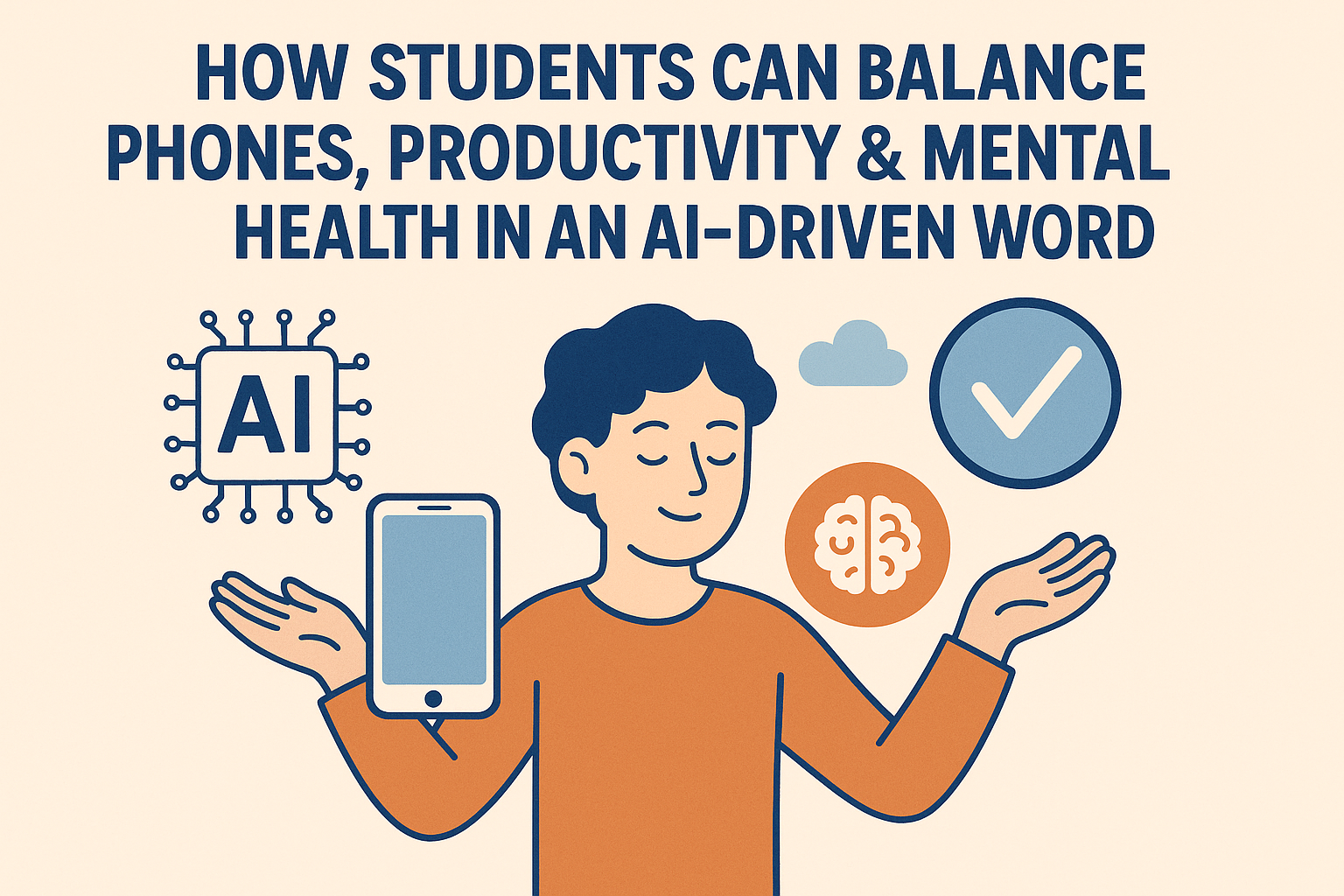
The 2026 Digital Wellness Era is not about quitting tech — it’s about using tech wisely, protecting the brain, and building a healthy digital-life balance.
AI algorithms in 2026 will be hyper-personalized.
Every swipe, pause, like, or emotion is tracked.
A. Dopamine-Driven Algorithms
Apps will show you exactly what keeps you scrolling — even when you don’t want to.
B. Emotion-Level Feed Personalization
Your facial reactions → determine content recommendations.
Symptoms include:
- Mental fog
- Low attention span
- High anxiety
- Reduced motivation
- Sleep disruption
D. Comparison Culture Intensifies
AI-enhanced beauty, success showcasing, and academic pressure amplify insecurities.
Digital wellness will no longer be optional.
It will be a survival necessity.
3. Top Digital Wellness Trends of 2026
These are not “future possibilities” — they are upcoming student lifestyle shifts.
1. AI-Powered Self-Regulation Apps
Apps will lock toxic feeds, block dopamine-triggering content, and regulate screen time.
2. Phone-Minimalist Routines
Students will adopt:
- Notification-off mornings
- Social-media-free study blocks
- Low-stim weekends
3. The Slow-Tech Movement
Replacing constant stimulation with:
- Reading
- Walking
- Analog hobbies
- Offline friendships
4. Smart Focus Ecosystems
Tech that supports studying instead of distracting:
- Anti-distraction modes
- AI focus boosters
- Ambient sound systems
4. Student Productivity in 2026: What Actually Works
Attention span will be the real currency of 2026.
1. Time-Blocking 3.0
AI auto-splits your day into:
- Deep work
- Light tasks
- Creative bursts
- Rest cycles
2. Deep Work + AI Assistance
Using AI for:
- Quick notes
- Summaries
- Structure
- Revision
- So the brain focuses only on: thinking, solving, learning.
3. The 20-Minute Dopamine Reset
A simple 2026 wellness technique:
- 20 minutes of no-screen
- Walk / breathe / stretch
- → Resets attention & reduces anxiety.
4. Hydration + Sleep Cycles
Students ignore these, but in 2026, AI will track them:
- Water reminders
- Sleep quality mapping
- Circadian rhythm optimization
5. How to Build a Digital Wellness Routine (2026 Edition)
A future-ready routine that protects your mind:
A. Morning Routine (Start Tech-Low)
- No phone for first 20 minutes
- Drink water
- Light movement
- Check messages only after freshening up
This prevents early dopamine spike → improves focus all day.
B. Study Routine (Tech-Smart, Not Tech-Heavy)
- Use AI only for planning, not entertainment
- Keep phone in another room
- Use noise apps or focus earbuds
- Apply “45–10” focus system
C. Night Routine (Digital Cool Down)
- Zero screens 30–40 minutes before sleep
- Warm lighting
- Journaling or stretching
- Avoid emotional conversations after 10 PM
Helps reset dopamine + cortisol.
D. Weekend Digital Reset
- Half-day “phone detox”
- Long shower
- Clean room
- Engage in offline hobbies
- Meet friends in person
6. Practical Steps to Reduce Phone Addiction
No unrealistic rules — real, doable habits.
Set a daily limit → AI will block apps after the cap.
2. App Position Shuffle
Move addictive apps to last page → reduces instant access.
3. No Phone During Meals
Helps digestion + reduces binge scrolling.
4. One-Day Dopamine Fast (Weekly)
Avoid:
- Short-form content
- Endless reels
- Negative feeds
You’ll feel lighter, calmer, more focused.
5. Use a Physical Alarm Clock
So you don’t grab your phone first thing.
1. AI Emotional Trackers
Identify stress patterns from your facial expressions.
2. Smart Notification Filters
Show only urgent + meaningful messages.
3. Distraction Analysis AIs
Track your scrolling triggers.
4. Brain-Coherence Apps
Sound-based apps that restore calm within minutes.
8. Conclusion: 2026 Will Belong to Students Who Balance Tech + Mindset
The future belongs to students who:
- Use AI for growth, not distraction
- Prioritize their mental health
- Build healthy digital boundaries
- Protect their attention like a superpower
Digital wellness isn’t about restricting your life.
It’s about protecting your mind so you can build the life you want.
