
Last updated on: December 19, 2025
175 Views
Yuvika Rathi
College Student
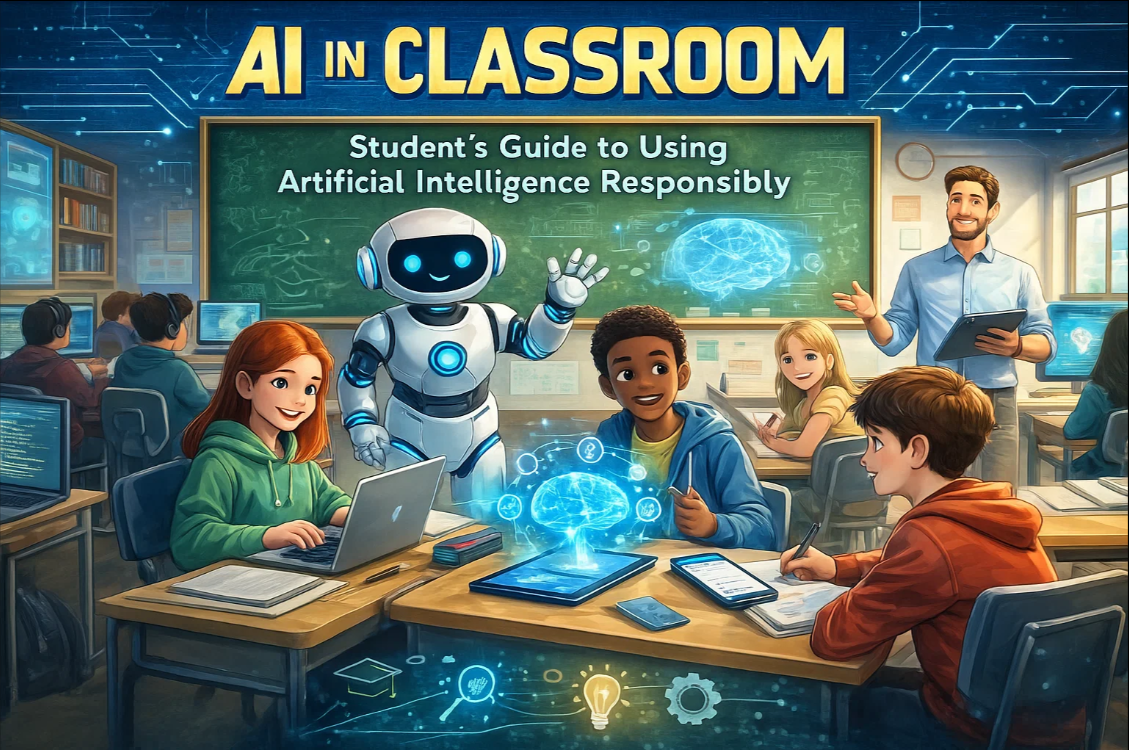
The rise of Artificial Intelligence (AI) tools like ChatGPT, Google Gemini, and others has fundamentally changed the way we learn. For students today, AI isn't just a futuristic concept—it's a powerful, real-world study partner. The goal is no longer to avoid AI, but to understand how to use Artificial Intelligence in education responsibly and effectively to maximize your learning potential.
AI is a sophisticated digital assistant. It can process massive amounts of data, summarize complex topics, and even help you brainstorm. However, it cannot replace critical thinking, creativity, or genuine understanding—the core skills that lead to success.
Using AI ethically means respecting academic integrity while still leveraging technology to learn better. Follow these three rules for responsible AI use in the classroom.
Instead of asking AI to write an essay, use it to kickstart your research and save time on initial legwork.
Once you have your own draft, use AI as a proofreader, editor, and style guide—not the original author.
In many cases, your institution will require you to cite any assistance you received from an AI model. Failure to do so can be considered plagiarism.
As a student, you may be creating content for school projects, a personal blog, or a student organization. AI can significantly boost the SEO (Search Engine Optimization) of your work.
| Task | Student-Friendly AI Application | SEO Benefit |
| Keyword Generation | Ask AI to generate a list of trending search terms related to your topic. | Helps your content get discovered by people searching online. |
| Title Optimization | Input a draft title and ask: "Optimize this title for clicks and SEO, keeping the primary keyword 'Digital Marketing' in mind." | A compelling, keyword-rich title increases your click-through rate (CTR). |
| Meta Description Draft | Ask AI to write a 150-character summary of your article for search engines. | Increases the relevance signal to search engines and encourages readers to click. |
Artificial intelligence is here to stay, and mastering its use is a 21st-century skill. By approaching AI with responsibility, transparency, and a focus on critical thinking, you turn a potential academic roadblock into a powerful tool that enhances your research, refines your writing, and prepares you for a technology-driven professional world.