
Last updated on: January 22, 2026
97 Views
Yuvika Rathi
College Student
The landscape of government recruitment in India has undergone a seismic shift. For decades, the Staff Selection Commission (SSC) operated on a "one-and-done" merit list, often leaving thousands of qualified candidates in the lurch due to unfilled vacancies or "seat wasting."
As we move through 2026, the introduction of the "Fix and Float" waiting list mechanism has redefined career security for aspirants. If you are preparing for SSC CGL, CHSL, or MTS 2026, understanding this system is no longer optional—it is the difference between a dream job and another year of coaching.
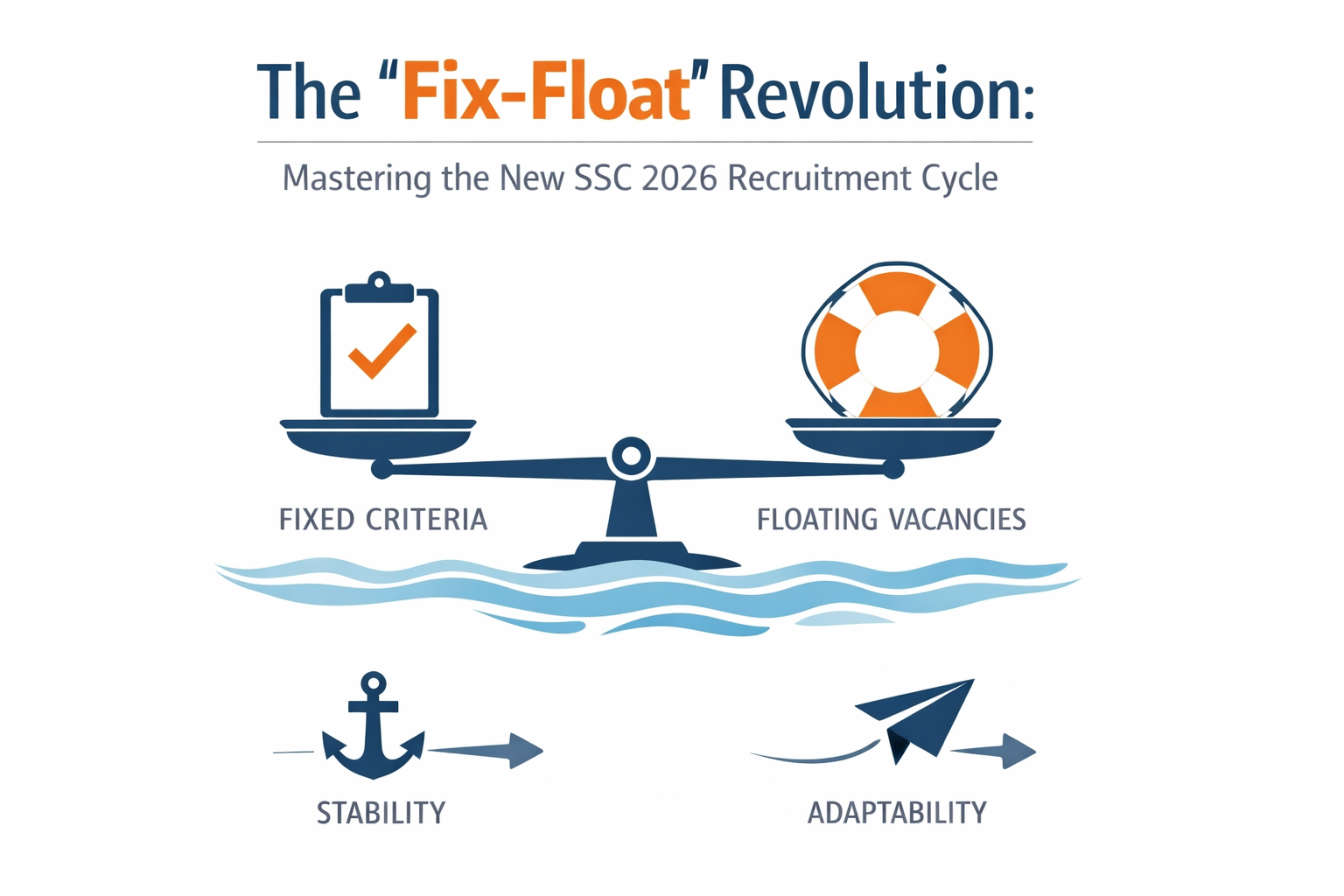
The Fix-Float system is a dynamic recruitment model designed to ensure 100% seat utilization. In previous years, if a candidate selected for CGL also cleared the UPSC or State PCS, they would vacate their SSC seat, which would then remain empty for the entire cycle.
In 2026, the SSC has introduced two distinct paths for shortlisted candidates:
When a candidate is allotted a post and chooses "Fix," they accept the appointment as final. This removes them from any further upgrades or waiting list considerations within that specific recruitment cycle. It is the preferred choice for those who have secured their "Dream Post" (e.g., Assistant Section Officer in MEA).
The "Float" option allows a candidate to accept an offered post while remaining eligible for a higher-preference post in subsequent allocation rounds (the Waiting List). If a vacancy opens up because a top-tier candidate vacated their seat, the "Float" candidate moves up the ladder.
| Feature | Old System (Pre-2026) | New Fix-Float System (2026) |
| Seat Utilization | Often < 85% due to seat wasting | Targeted 100% via Waiting List |
| Candidate Choice | One-time preference; no upgrades | Dynamic "Float" for better posts |
| Waiting List | Non-existent or ineffective | Formalized "Active Waitlist" rounds |
| Preparation Goal | Clear the initial cut-off | Maximize score to stay high on the Float list |
With the stakes higher and the system more complex, the "Offline-only" or "Online-only" approach is becoming obsolete. The 2026 topper’s mantra is Blended Learning.
Since the "Float" system rewards those with higher marks even after the first list is out, your margin for error is zero. Use MOOC platforms that offer AI-based predictive analytics. These apps analyze your mock test data to predict where you stand in the "Float" queue relative to thousands of other aspirants.
While online videos are great for concepts, the SSC 2026 Computer Based Examination (CBE) requires physical stamina and mental focus. Blended learning suggests using offline centers for "Proctored Mock Tests." Simulating the exam hall environment is crucial to ensure your "Fix" post is secured in the first round itself.
2026 has seen a rise in "General Awareness" weightage. Use learning apps to consume micro-content—5-minute capsules on current affairs—while using offline textbooks for deep-diving into Quantitative Aptitude and Logical Reasoning.
The Fix-Float system is a win-win. It reduces the "recruitment gap" and ensures that hardworking candidates on the borderline aren't forced to wait another 12 months for a fresh notification. By combining the flexibility of online MOOCs with the discipline of offline coaching, you can navigate this new system and secure your spot in the Indian bureaucracy.