
Last updated on: January 18, 2026
123 Views
Yuvika Rathi
College Student
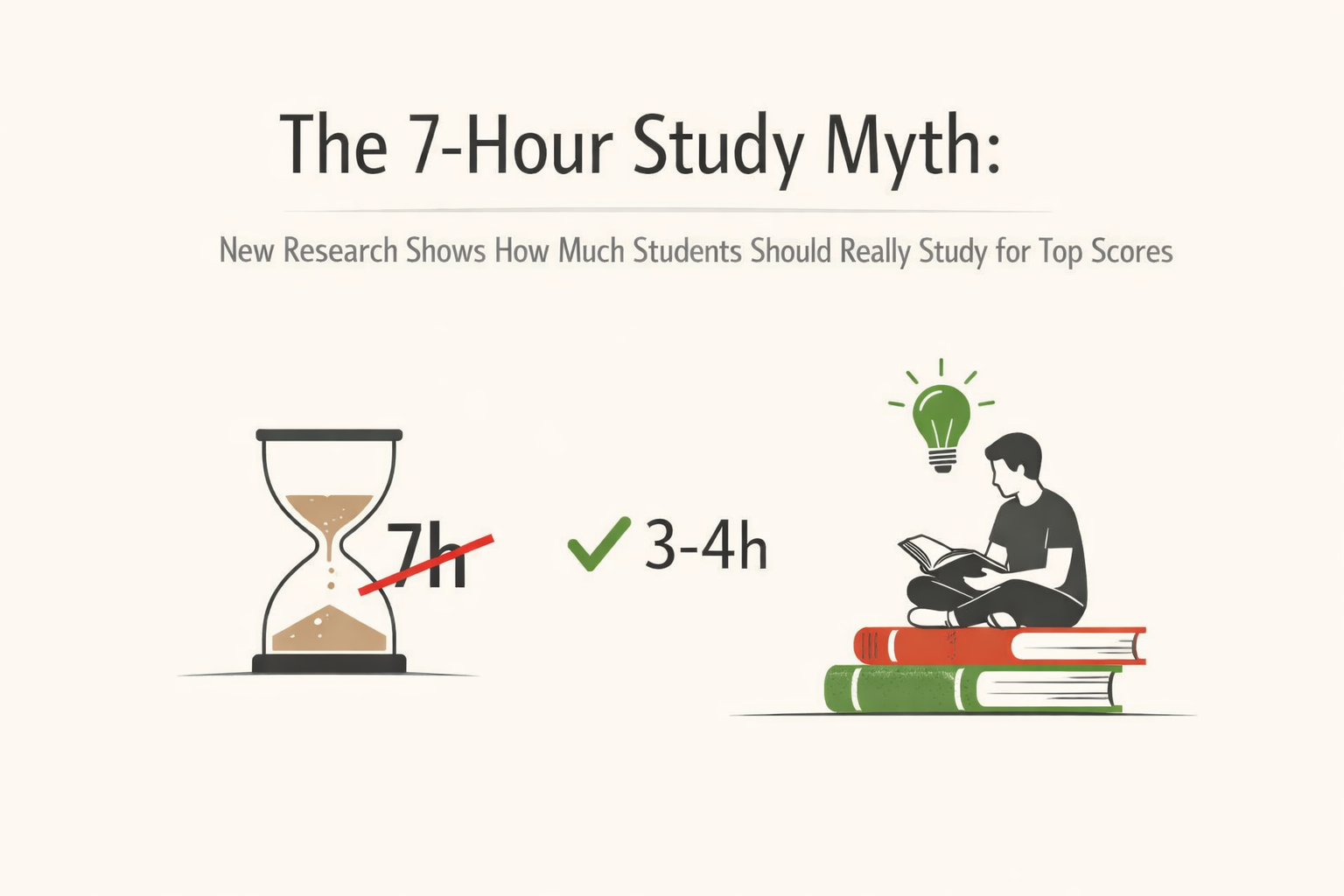
For decades, the "all-nighter" and the "7-hour library grind" were seen as badges of honor for high-achieving students. However, as we move through 2026, a wave of neuroscientific research has officially debunked the marathon study session.
New data suggests that the "7-hour grind" isn't just inefficient—it’s actually counterproductive to long-term memory consolidation. If you want to rank at the top of your class this year, you need to stop counting hours and start measuring cognitive load.
Research published in early 2026 highlights a phenomenon called Cognitive Satiation. After approximately 90 to 120 minutes of intense mental activity, the brain’s ability to "encode" new information drops by nearly 40%.
Think of your brain like a sponge. Once it is saturated with data, adding more "water" just leads to runoff. You must allow the sponge to dry (rest) before it can absorb again.
Top-tier students in 2026 have abandoned the 7-hour marathon for High-Intensity Interval Learning (HIIL). This method aligns with your brain’s natural Ultradian Rhythms.
| Phase | Time | Action | Why it Works |
| Priming | 10 Mins | Active Recall of previous day | Wires existing neurons for new data. |
| Deep Work | 60 Mins | 100% Focus (No Phone/Music) | Reaches "Flow State" for complex logic. |
| Stress-Test | 20 Mins | Blurting or Practice Questions | Moves info to Long-Term Memory. |
| The Gap | 30 Mins | Zero Input (Walk/Nap) | Allows for "Synaptic Tagging." |
Total Time: 2 Hours. Effectiveness: Equivalent to 5 hours of traditional studying.
In 2026, the most successful students are treating sleep as a mandatory study session. Neuroscience confirms that Physical Memory Consolidation—the process of turning what you read into a permanent "file" in your brain—happens exclusively during REM and Deep Sleep cycles.
Smart studying in 2026 involves using data to tell you when to stop.
Professional Verdict: If your goal is a top-tier score in 2026, aim for 3 to 4 hours of "Power Blocks" per day. Anything beyond that is likely "performative productivity"—looking busy without actually getting smarter.