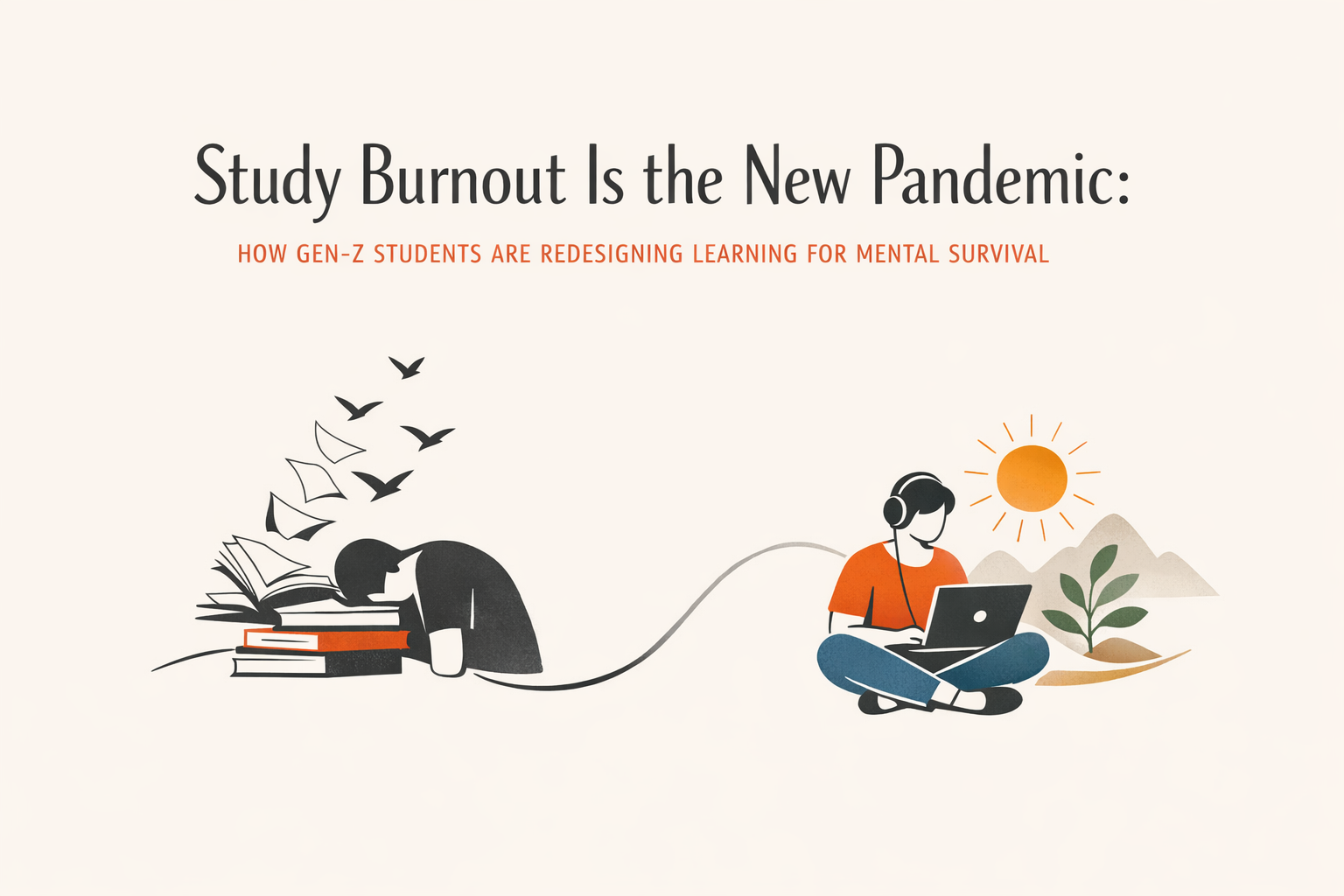
In 2026, the academic world has reached a breaking point. With 83% of Gen-Z students reporting chronic burnout—a figure higher than any previous generation—the traditional "grind culture" is being replaced by a radical movement toward educational sustainability. This is not just a trend; it is a structural redesign of how humans learn to ensure mental survival in an age of hyper-connectivity and economic instability.
The Anatomy of the Burnout Pandemic (2026 Data)
Burnout is no longer viewed as "laziness" or "stress"; it is classified as a structural unravelling of well-being. According to 2026 longitudinal studies, student burnout now follows three devastating dimensions:
- Persistent Exhaustion: Physical and mental corrosion that makes simple tasks feel insurmountable.
- Academic Cynicism: A total emotional shutdown and detachment from the value of education.
- Erosion of Efficacy: The "silent collapse" where students lose the belief that they are capable of succeeding, regardless of effort.
| Statistic (2026) | Impact Level |
| 80-83% | Gen-Z students reporting severe burnout |
| 98% | Students experiencing at least one symptom of mental fatigue |
| 40% | Gen-Z reporting they are "almost always stressed" |
| 75% | Students losing at least one day of productivity per month due to mental health |
Redesigning Learning: The Gen-Z Survival Framework
Students in 2026 are taking the lead in redesigning their environments. The "Industrial Revolution" model of education (fixed times, standardized output) is being dismantled in favor of Human-Centered Learning.
1. The Shift to Asynchronous "Flow" Learning
Gen-Z is rejecting the rigid 8-hour school day. By moving toward asynchronous digital modules, students can align learning with their natural circadian rhythms.
- Why it works: It eliminates "performative presence" and allows students to enter deep-focus "flow states" without the anxiety of a ringing bell.
2. Micro-Boundaries & Digital Hygiene
In 2026, "boundary-setting" is considered a core academic skill. Students are adopting:
- The "Cognitive Cooldown": Mandatory 5-minute periods of silence or "unplugging" between tasks to lower cortisol.
- Grayscale & Focus Modes: Using AI-driven app blockers to prevent "doom-scrolling," which is a primary driver of digital fatigue.
3. Active & Project-Based Learning (PBL)
To combat "boreout" (the exhaustion of meaningless tasks), learning is being redesigned around real-world impact.
- The Trend: Instead of testing for memorization, 2026 curricula favor projects that solve community problems. This provides the "Sense of Purpose" that 89% of Gen-Z cites as vital for satisfaction.
Future-Proofing Mental Well-being: Innovative Strategies
The redesign isn't just about doing less work; it’s about doing different work.
- AI-Augmented Support: Hyper-personalized AI tutors provide real-time, low-stakes feedback, reducing the "fear of being wrong" that triggers academic anxiety.
- Somatic Integration: Schools are incorporating "Movement Breaks"—yoga, progressive muscle relaxation, and outdoor learning—to reset the nervous system.
- Peer Scaffolding: Moving away from competition toward "Support Collectives," where students share resources and emotional labor.
Reference Links & Deep Dives
- Anti-Hustle Culture 2026: Gen Z's Rebellion Against Burnout
- Why Gen Z is Burning Out Faster Than Any Generation Before
- UNICEF: Youth Overwhelmed by Relentless Global Crises
- The Impact of Academic Burnout on Achievement (Frontiers in Psychology)
- EdTech 2026: AI Tackling the Mental Health Crisis
