
Last updated on: January 5, 2026
196 Views
Yuvika Rathi
College Student
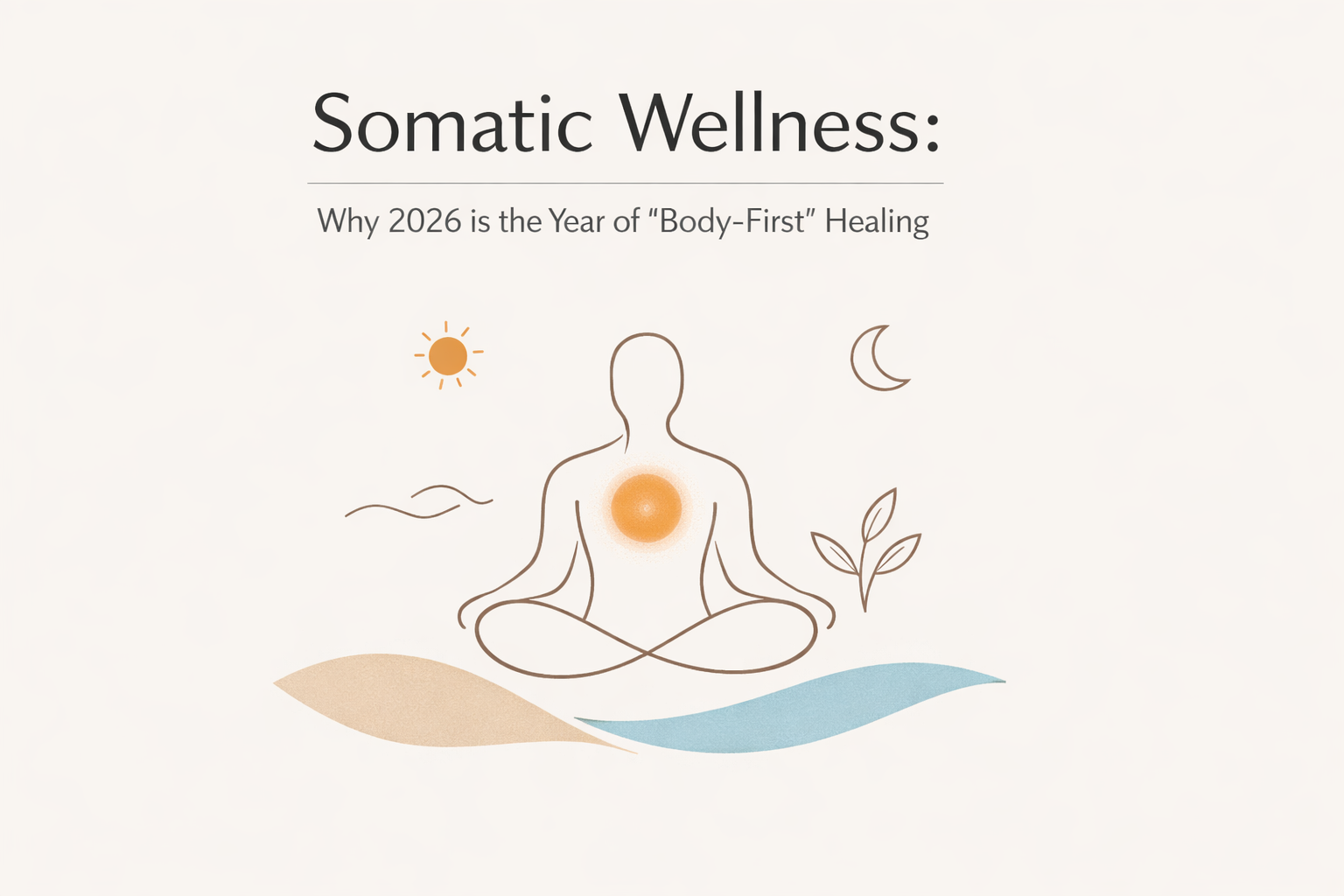
For decades, the wellness industry was dominated by "top-down" approaches: talk therapy to change our thoughts, or meditation to quiet the mind. But as we enter 2026, a paradigm shift has occurred. We have moved into the era of Somatic Wellness—a "bottom-up" approach that recognizes that stress, trauma, and anxiety are not just mental states, but physical ones stored in our nervous system.
In 2026, we no longer just "manage" stress; we train our capacity to handle it. This is the rise of Mental Fitness. Just as we hit the gym for our muscles, "Neurofeedback Lounges" and "Brain Gyms" are popping up in urban centers. These spaces use real-time EEG data to help users train their brains to shift from a "high-alert" (sympathetic) state to a "rest-and-digest" (parasympathetic) state on command.
The "Vagus Nerve" has officially gone mainstream. Research in 2025 and 2026 has solidified the link between vagal tone and overall longevity.
The "no pain, no gain" mentality of the 2010s has been replaced by Micro-Workouts or "Exercise Snacks."
In 2026, people are increasingly turning to Somatic Experiencing to process "stuck" emotions. Unlike traditional therapy, SE focuses on physical sensations—tingling, warmth, or muscle tension—to complete the body's natural "fight-or-flight" cycle. Techniques like Pendulation (moving attention between a place of tension and a place of safety) are helping millions resolve chronic stress without needing to endlessly retell their stories.

Sep 28, 2025

Feb 27, 2026

Jan 27, 2026
May 21, 2025
Feb 27, 2026

Sep 10, 2025

May 2, 2026

Jan 22, 2026

Sep 9, 2025

Sep 17, 2025

Sep 20, 2025
Feb 16, 2026

Sep 9, 2025

May 21, 2025

May 3, 2025