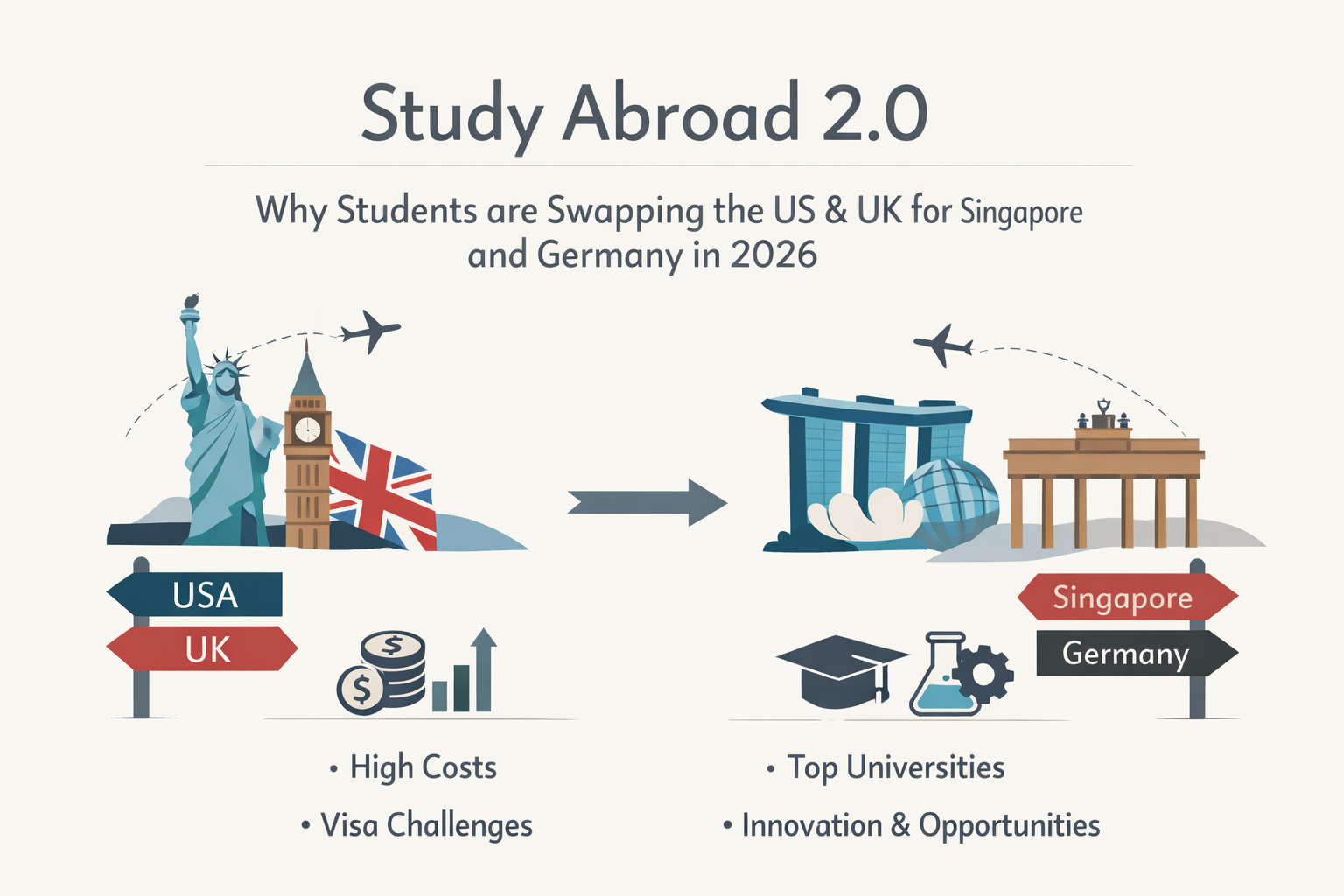
In 2026, the "prestige" of a degree is being outranked by one critical factor: Return on Investment (ROI). With tuition in the US surpassing $50,000 annually and the UK tightening its Graduate Route visas, a new era of global education has arrived. Students are now looking toward "Value Hubs"—countries that offer world-class tech ecosystems, lower tuition, and clearer pathways to residency.
The Great Pivot: Beyond the "Big Four"
For decades, the US, UK, Canada, and Australia dominated the market. However, 2026 search trends show a 35% increase in queries for "affordable English-taught degrees in Europe." The reason is simple: students no longer want to graduate with six-figure debt into an uncertain job market.
1. Germany: The King of Free Education
Germany remains the undisputed leader for STEM and Engineering. By 2026, nearly 60,000 Indian students are expected to be enrolled in German public universities.
- The Draw: Zero tuition fees at public universities (only a small semester fee of €150–€350).
- The Career Edge: An 18-month "Job Seeker" visa post-graduation and a fast track to the EU Blue Card.
- Top Hubs: Berlin (Tech/Startups), Munich (Automotive/Engineering), and Aachen (Research).
2. Singapore: The Silicon Valley of Asia
Singapore has emerged as the preferred destination for students who want Western-style education without the Western price tag or distance.
- The Draw: National University of Singapore (NUS) and Nanyang Technological University (NTU) consistently rank in the Global Top 15.
- The Career Edge: Strong industry links with global tech giants like Google, Meta, and ByteDance, which have their APAC headquarters in the city-state.
- Proximity: For Asian students, the 4–5 hour flight time is a major logistical and emotional advantage.
2026 Cost & Opportunity Comparison
| Feature | United Kingdom | Germany | Singapore |
| Average Tuition | £15,000 – £35,000 | €0 – €3,000 | S$20,000 – S$40,000 |
| Living Costs (Month) | £1,200+ | €900 – €1,100 | S$1,500 – S$2,500 |
| Post-Study Work | 2 Years (under review) | 18 Months | 1 Year (Extension possible) |
| Primary Industry | Finance / Creative | STEM / Automotive | FinTech / AI / Biotech |
Emerging "Value Destinations" to Watch
If Singapore and Germany are the new mainstream, these three are the "rising stars" for 2026:
- Ireland: Known as the "Internet Capital of Europe," it offers a 2-year post-study work visa and is the only English-speaking country left in the EU.
- The Netherlands: Famous for its "Orientation Year" visa, which gives graduates a year to find a job or start a business in the thriving Dutch startup scene.
- United Arab Emirates (Dubai): Boasting 35+ international branch campuses (including NYU and Middlesex), Dubai offers proximity to home and tax-free salary potential.
How to Prepare for the 2026 Intake
- Master the Language: While programs are in English, learning basic German or Mandarin significantly boosts your local internship chances.
- Digital Portfolios: 2026 admissions focus less on test scores and more on proof of work. Use GitHub or LinkedIn to showcase projects.
- Blocked Accounts: Ensure you understand the financial requirements early (e.g., Germany’s mandatory €11,904 Blocked Account).
Reference Links & Sources
- Why Indian Students are Choosing Europe Over the US in 2026 - Maven Consulting
- Germany vs Singapore: Which Country is Best for Students? - Expatrio
- Post-Study Work Visas 2026: Ultimate Opportunities Guide - Gateway International
- Study Abroad Trends: Indian Students Turn to Germany and UAE - Y-Axis
