
Last updated on: February 27, 2026
24 Views
Yuvika Rathi
College Student
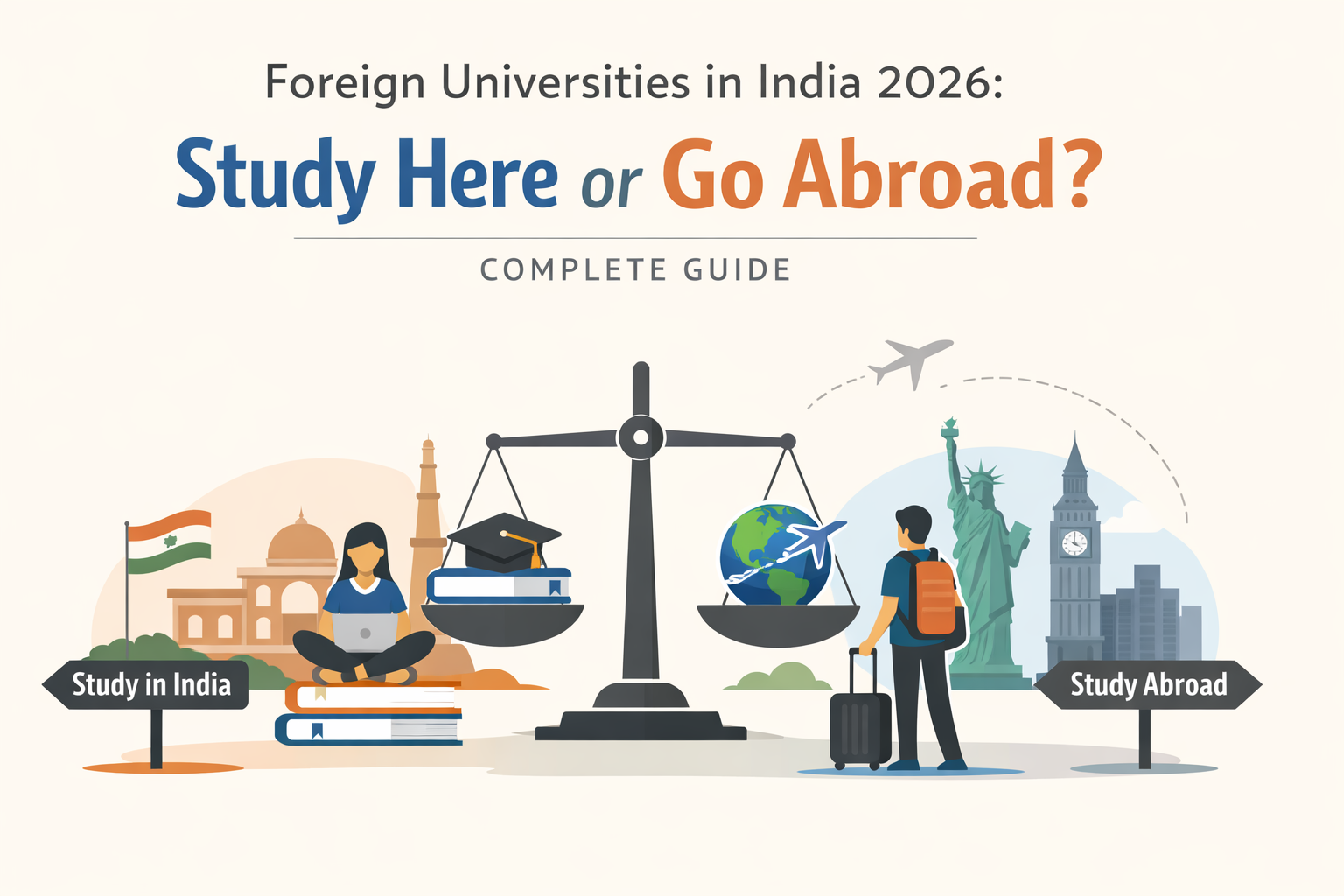
For the first time in Indian history, students can earn a University of Wollongong degree, a Deakin University credential, or potentially a degree from institutions like the University of Southampton — without leaving India. The UGC's landmark 2023 regulations permitting foreign universities to establish Indian campuses are now bearing fruit in 2026, with multiple institutions actively enrolling students.
The promise is seductive: international education at Indian prices, zero visa hassles, live at home while earning a globally recognized degree. But the question every prospective student is asking is whether a foreign degree earned in Jaipur carries the same weight as one earned in Melbourne or London.
As of early 2026, the University of Wollongong has operational campuses in Gujarat's GIFT City, Deakin University has established presence in the same zone, and several other institutions from Australia, the UK, and the UAE are in advanced setup stages. These campuses offer undergraduate and postgraduate programs primarily in business, technology, and design — fields with high demand and relatively low infrastructure requirements.
Importantly, these are not "partnership" programs or "twinning" arrangements. Under UGC regulations, foreign universities operating in India must offer the exact same degree as their home campus. The credential you receive states the university name — not a separate "India campus" designation. On paper, it's identical.
A three-year undergraduate program at an Australian university in Australia costs between ₹1.2–1.8 crore (including living expenses). The same program at their Indian campus runs approximately ₹25–40 lakhs total. That's a 60–70% cost reduction — a transformative difference for middle-income families.
But here's the financial nuance nobody mentions upfront: you're saving on living costs and visa expenses, but you're also losing access to part-time work rights. In Australia, international students can work 48 hours per fortnight, earning ₹1.5–2 lakhs monthly. Over three years, that's ₹50+ lakhs in potential income — which partially offsets the higher upfront cost of studying abroad. The Indian campus offers no such offset.
Employers recognize the degree. But do they recognize the experience? A student graduating from Deakin's Melbourne campus brings international exposure, cultural adaptability, a global professional network, and often internship experience with multinational firms operating in mature economies. A student graduating from Deakin's GIFT City campus brings... a degree.
For roles in Indian firms or Middle Eastern markets, the difference may be negligible. For roles requiring relocation to Western markets, immigration points systems explicitly reward degrees and time spent studying in the destination country. Canada's Express Entry, Australia's SkillSelect, and the UK's Graduate Route visa all favor candidates who studied on-site.
Students targeting the Indian job market or Middle Eastern opportunities, those with strong family obligations requiring them to stay in India, students planning postgraduate study abroad later who want a recognized undergrad credential first, and families prioritizing cost savings over experiential learning will find the India campus option compelling.
Students targeting PR or long-term settlement in the West, those seeking internships and part-time work income during study, individuals valuing cultural immersion and global networking as part of their education, and students whose field requires lab access, research infrastructure, or industry ecosystems unavailable in India should still invest in the full abroad experience.
Foreign university campuses in India are a legitimate, cost-effective pathway to an international credential. But they're not a full substitute for the abroad experience — they're a different product. Know what you're buying, and more importantly, know what you're giving up.