
Last updated on: March 9, 2026
90 Views
Yuvika Rathi
College Student
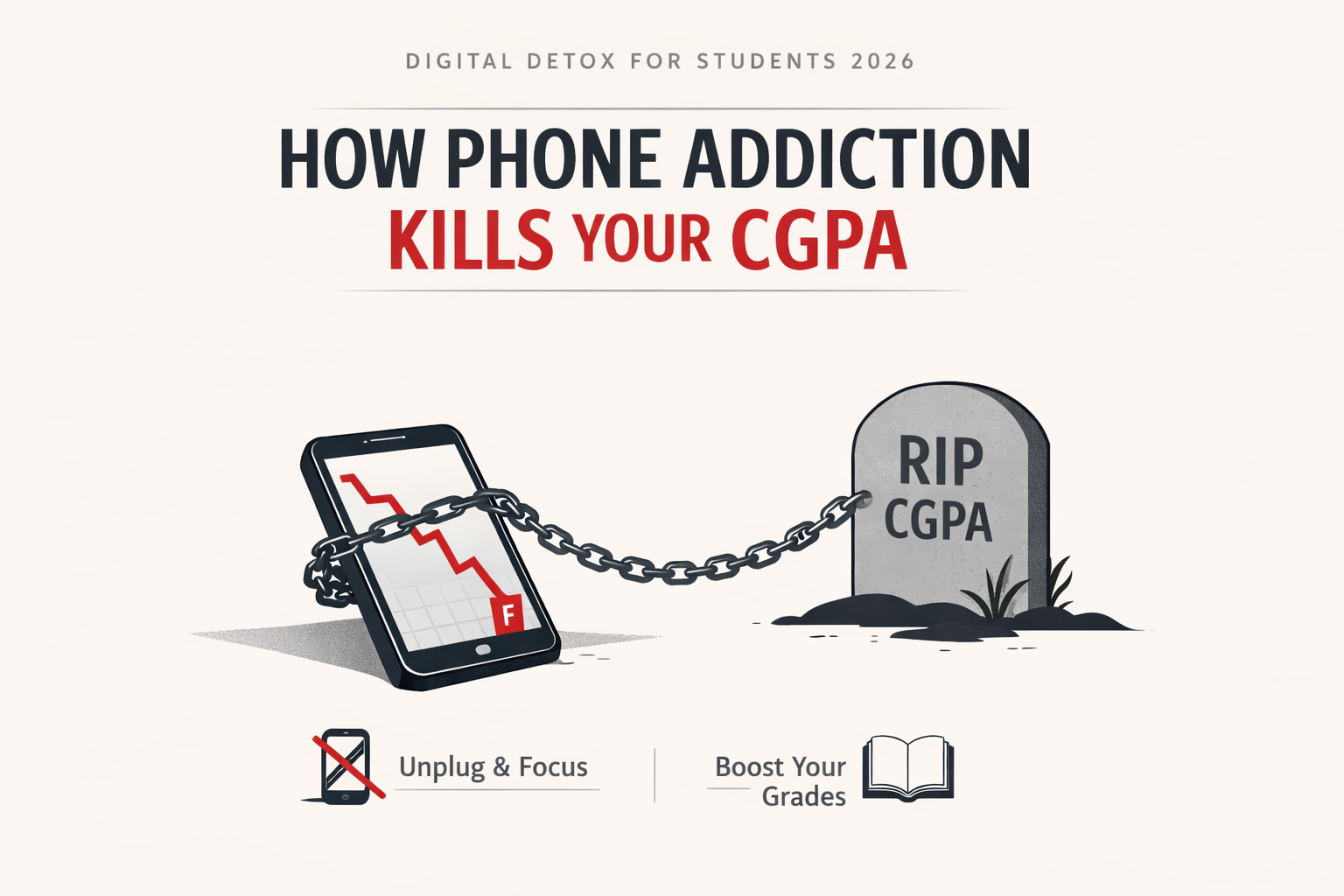
Research from American universities tracking 99 undergraduate iPhone users found that one additional hour of phone use per day lowered current term GPA by 0.152 points on average. That's not a typo. One hour equals 0.152 GPA points lost.
Do the math for a typical Indian engineering student averaging 6 hours daily phone time. That's approximately 0.91 CGPA points erased. A student capable of 8.5 CGPA performs at 7.6 CGPA. The difference between IIT Bombay placement and IIT Bombay struggle. The difference between scholarship approval and scholarship denial. The difference between graduate school acceptance and rejection.
Time spent using smartphones significantly reduces GPA and self-reported measures of academic productivity. This isn't motivational rhetoric. It's quantified research measuring objective ScreenTime data against official university GPA records.
Indian students face unique phone addiction triggers absent in Western research samples. JEE coaching apps blast notifications hourly. NEET preparation platforms send "motivational" quotes every morning. College WhatsApp groups generate 200 plus unread messages daily. Telegram channels share "exclusive" study materials requiring immediate download.
Every notification is framed as urgent academic necessity. Missing one group message might mean missing tomorrow's surprise test announcement. Ignoring one app notification risks falling behind in the national rank race. The phone stops being distraction and becomes academic survival tool — or so students convince themselves.
Malaysian research tracking 176 students across seven consecutive days found that the more students utilized smartphones for university learning activities, the lower their CGPA. Not less. More. Increased educational phone use correlated with decreased academic performance. The students using phones "for studying" performed worse than students who didn't.
The pattern is clear: phones marketed as learning tools primarily function as distraction devices with learning-adjacent features sprinkled on top.
Constant notifications and endless scrolling increase cognitive overload contributing to burnout. Social media comparisons heighten anxiety and lower self-esteem. Blue light from screens interferes with melatonin production making it harder to fall asleep. Late-night scrolling reduces sleep quality affecting focus and academic performance the next day.
Multitasking between devices decreases concentration and efficiency. Frequent distractions make it harder to retain information while studying. Research on college students participating in cognitive tests found that the presence of phones negatively impacted attention and task performance — even when phones were switched off and face-down on the table.
Your brain knows the phone exists nearby. That knowledge alone fragments attention. Neurons allocate processing power monitoring for potential notifications instead of fully encoding the physics derivation you're reading. The cost is invisible but measurable.
Students averaging 8 plus hours daily screen time reported lowest overall grades of D minus compared to B minus for students averaging 0 to 1 hours. The lowest performers weren't using phones for entertainment alone. Many reported heavy educational app usage. The damage wasn't in what they used phones for. The damage was in using phones constantly regardless of purpose.
Install Digital Wellbeing tools on Android or ScreenTime on iPhone. Track your actual usage without changing behavior. Most students guess 3 hours daily. Tracking reveals 6 to 8 hours reality.
Record which apps consume most time. Instagram, YouTube, and WhatsApp typically dominate. Note when usage spikes: morning wake-up scroll, between-class gaps, pre-sleep browsing. Identify your specific addiction patterns before attempting behavior change.
Write down current CGPA. You'll measure again after 30 days. Quantified results beat vague feelings of "doing better."
Download blocking apps optimized for students in 2026: AppBlock for Android allows one-tap instant blocking with automated scheduling at specific study times. Forest turns focus into gamified tree-growing where distractions kill your virtual forest. Freedom blocks entire websites and apps across all devices with strict enforcement preventing mid-session exits. Flipd enables group challenges ideal for study groups where everyone commits simultaneously creating social accountability.
Block social media apps from 6 AM to 12 PM and 2 PM to 10 PM. That's 16 hours daily of distraction-free potential. Keep WhatsApp accessible but mute all group chats except family emergency group. Instagram, YouTube, Twitter, Reddit — complete lockout during blocked hours.
The first three days feel impossible. Phantom vibration sensations persist. Hand reaches for phone automatically every 8 to 10 minutes despite phone being in another room. This is withdrawal. Normal. Temporary.
Turn off all non-essential notifications. Coaching app motivational quotes? Off. E-commerce sale alerts? Off. News app breaking news? Off. LinkedIn connection requests? Off.
Keep only: phone calls, SMS from saved contacts, calendar reminders for classes and exams. That's it. Everything else is discretionary information you check on your schedule, not algorithmic interruptions forcing attention theft.
Disabling notifications for non-urgent apps reduces mental clutter and creates peaceful focused environment. Students report concentration improving within 48 hours of notification elimination. The mind stops operating in permanent standby mode waiting for the next ping.
Charge phone outside bedroom. This single change improves sleep quality measurably. Students keeping devices away from bed report falling asleep faster and achieving more profound restful sleep by reducing exposure to blue light which interferes with melatonin production and disrupts circadian rhythm.
During study sessions, phone stays in locker or with roommate in different room. Physical distance creates behavioral friction. Walking 30 seconds to retrieve phone provides enough delay for rational brain to override impulsive craving.
Study in spaces without phones. Libraries enforce this naturally. At home, designate kitchen table as phone-free study zone. Dorm desk becomes device-restricted area. Spatial separation builds environmental discipline.
Digital detox isn't about creating emptiness. It's about filling reclaimed time with higher-value activities. The 3 hours previously lost to Instagram don't magically become productive. They become empty. Empty feels uncomfortable. Discomfort triggers relapse.
Build replacement habits proactively. Morning wake-up scroll becomes morning 10-minute walk. Between-class phone time becomes 15-minute power nap or actual conversation with classmate. Pre-sleep YouTube becomes reading physical books placed on bedside table night before.
Engage in offline hobbies. Puzzles, novels, sketching, guitar, cooking. Anything requiring hands and attention that phones cannot interrupt. Twenty-minute breaks from studying should reset attention, not fragment it further with scroll sessions.
Georgetown University study recruiting nearly 500 people to cut internet access for two weeks found participants averaged 5 hours screen time before study. After intervention, participants halved screen time to approximately 2.5 hours daily.
Participants completed before-and-after questionnaires containing established indicators of wellbeing and mental health including positive emotions, negative emotions, symptoms of anxiety and depression. Digital detoxes positively influenced all metrics. The improvements were in same ballpark as established treatments like cognitive-behavioral therapy and larger than typical effect of antidepressants in clinical trials.
People didn't just report feeling tiny bit better. On average, they felt meaningfully less anxious and stressed and more satisfied with their lives. Participants also slept 20 minutes more per night on average when detoxing.
For students, this translates directly to academic performance. Better sleep equals better memory consolidation. Less anxiety equals clearer thinking during exams. More satisfied life equals higher motivation to study. The CGPA impact isn't just about "more study time." It's about higher-quality cognitive function during existing study time.
Wanting to check phone in first few days is normal. It doesn't mean you're failing detox. Keep phone out of reach so choice isn't automatic. When urge appears, notice it, pause, redirect attention to body or breath.
Initial withdrawal symptoms include anxiety, restlessness, phantom vibrations, compulsive hand-checking for device that isn't there, and difficulty concentrating because brain expects dopamine hits every few minutes. These symptoms peak Days 3 to 5, then gradually diminish.
Students attempting digital detox report 60 to 70 percent success rate when using blocking apps with social accountability. Solo willpower-only attempts report 15 to 20 percent success rate. The difference: structural barriers plus peer pressure versus pure self-discipline.
Most students relapse after 10 to 14 days when initial novelty wears off and exam pressure spikes. The thought pattern: "I need to check coaching app for updated syllabus" becomes gateway to 90-minute Instagram binge.
Prevent rebound by allowing controlled phone access windows. From 8 PM to 9 PM daily, unrestricted access. Check all apps, watch all videos, scroll all feeds. Guilt-free. Then lock down again until next evening. Controlled indulgence prevents binge behavior better than absolute prohibition.
Week 1: Sleep improves. Fall asleep 15 to 20 minutes faster. Wake feeling marginally more rested.
Week 2: Concentration during lectures improves. Can follow professor explanations without mind wandering to last Instagram story seen.
Week 3: Study session productivity jumps. Two-hour focused study accomplishes what previously required four hours with phone interruptions.
Week 4: First exam post-detox. Performance feels different. Recall is clearer. Anxiety is lower. Exam paper doesn't trigger panic.
Semester End: CGPA rises 0.3 to 0.5 points for students maintaining consistent detox. Not dramatic transformation. Meaningful improvement. The difference between 7.2 and 7.7 CGPA. The difference that matters for placements and graduate school applications.
Digital detox for students isn't about technology hatred. It's about attention allocation. Your phone isn't evil. Your phone is engineered by billion-dollar companies employing PhD psychologists optimizing for engagement maximization. You're not weak for getting hooked. You're human facing industrial-scale behavioral manipulation.
The students who win academically in 2026 aren't those with highest IQ or best coaching. They're students who protect attention as their most valuable resource. They treat focus like currency. They recognize every notification is attention theft. They build systems preventing theft.
Your CGPA is determined by how effectively you process information and demonstrate mastery during exams. Processing requires uninterrupted cognitive bandwidth. Demonstration requires confidence built through genuine mastery, not cramming interrupted by scroll breaks. The phone destroys both.
One additional hour daily phone use lowers GPA by 0.152 points. The inverse is also true. One hour daily phone reduction raises GPA by approximately same margin. Thirty days of consistent detox recovers 0.3 to 0.5 CGPA points.
The choice isn't phone versus no phone. The choice is fragmented attention producing mediocre results versus protected attention producing excellent results. The phone stays. The addiction goes. The CGPA rises.